Customer · Kumasi Food Guide
What 300+ Deliveries Taught Us About Ordering Food in Kumasi
What more than 300 completed deliveries taught us about customers, merchants, riders and building a better local food-delivery experience in Kumasi.
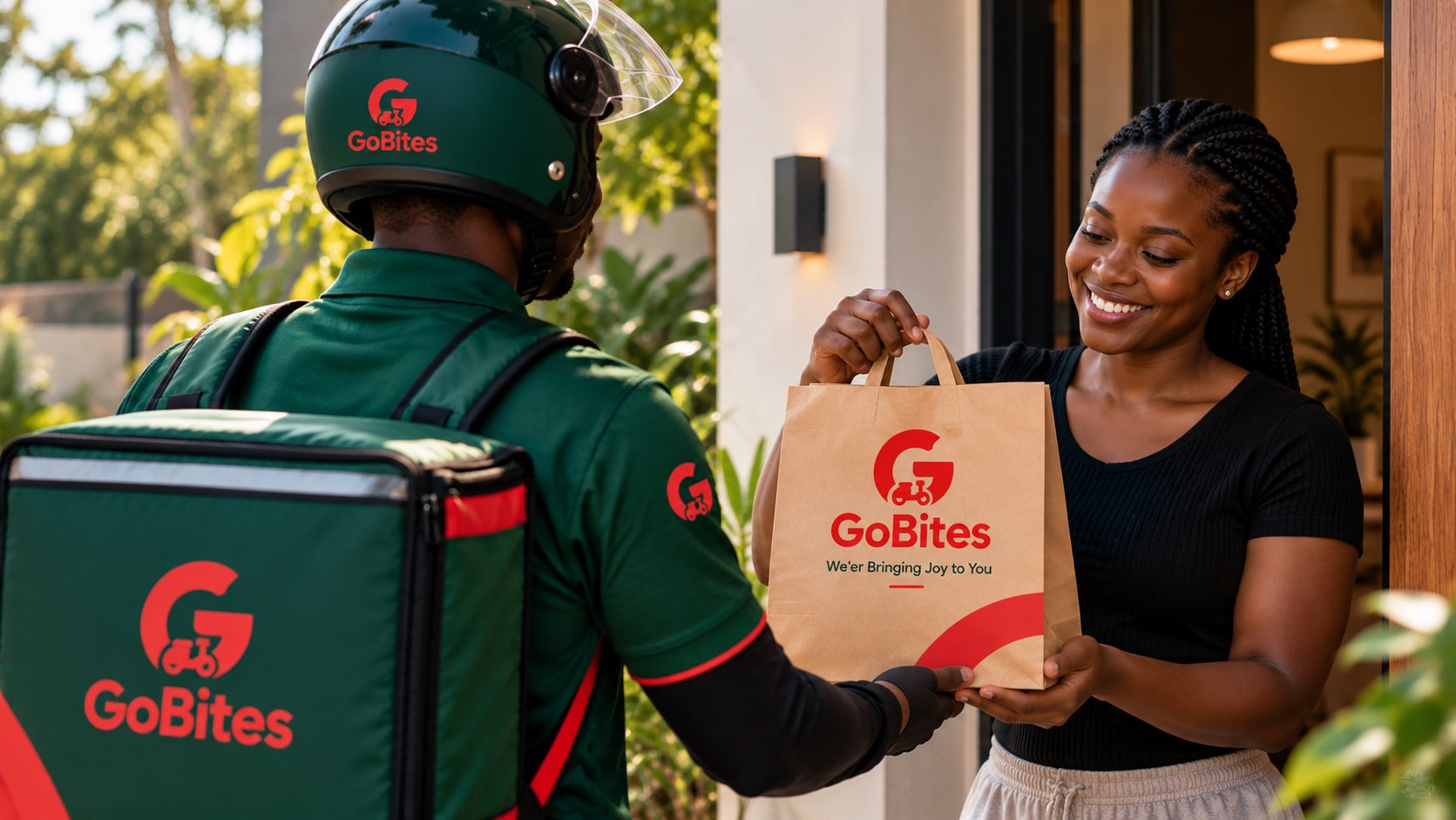
Before GoBites had a full app-based ordering experience, we started with something much simpler.
WhatsApp.
Customers sent us their orders. We coordinated with merchants. Riders picked up the food. We followed deliveries manually and dealt with the small problems that appear between someone saying, “I want this food,” and that food actually arriving at their door.
More than 300 completed deliveries later, we had learned something important:
Food delivery looks simple from the outside.
It is not.
A customer sees a meal, places an order and waits.
Behind that one order are decisions about restaurant availability, preparation time, directions, communication, rider movement, payment, packaging and timing.
Our pilot in Kumasi gave us a much better understanding of those details.
This is not a scientific study of every food-delivery customer in Kumasi. It is what we observed while operating GoBites, speaking with customers, working with merchants and coordinating real deliveries.
Here are some of the biggest lessons.
At a glance
Key Takeaways
- Make ordering clear enough that customers need very little explanation.
- Treat customer, merchant and rider operations as one connected journey.
- Use precise location details and timely status updates to reduce uncertainty.
- Build from real delivery behaviour instead of assumptions made at a desk.
1. Ordering food should require as little explanation as possible
One of the advantages of starting with WhatsApp was that customers could simply tell us what they wanted.
There was almost no learning curve.
Someone could send a message, ask a question about a meal and place an order in a conversation they already understood.
But manual ordering also showed us where friction begins.
When customers have to repeatedly explain their location, confirm menu availability, ask whether an item is still available or wait while someone checks with a restaurant, something that should feel convenient begins to feel like work.
That gave us a simple principle:
Ordering food should reduce decisions, not create more of them.
A good food-delivery experience should make the important things obvious.
- What is available?
- How much does it cost?
- Can it be delivered to me?
- What happens after I order?
The less uncertainty a customer has to resolve manually, the easier it becomes to order again.
2. The food is only one part of the experience
People open a food-delivery service because they want food.
But the quality of the experience depends on much more than the meal.
A restaurant can prepare great food and the customer can still have a bad experience if the delivery is confusing.
A rider may do everything correctly and still arrive late because the food was not ready when they reached the restaurant.
A customer may enter a location that makes perfect sense to them but is difficult for someone unfamiliar with the area to find.
Every part affects how the customer eventually feels about the order.
That taught us to think about food delivery as one connected journey:
Customer → Merchant → Rider → Customer.
If one part breaks, the customer rarely separates the problem into departments.
They simply remember that the delivery was not good.
That is why improving food delivery requires improving the entire chain rather than focusing only on the ordering screen.
3. Location is a bigger part of food delivery than people think
Anyone who has tried to find an unfamiliar address in a busy part of Kumasi knows that location can be complicated.
A customer might describe where they are using a landmark that everyone around them knows.
A rider may know the general area but not the exact building.
Sometimes a short phone call solves everything.
Sometimes it creates another five or ten minutes of back-and-forth.
During a delivery, those minutes matter.
It reinforced why better location information and clearer delivery tracking are important parts of the experience.
Customers want to know where their order is.
Riders need enough information to reach customers without unnecessary searching.
Merchants need to know when someone is arriving to collect an order.
A better food-delivery platform has to connect all three.
4. Merchants need simplicity just as much as customers do
It is easy to design food-delivery technology entirely around the person placing the order.
But restaurants are doing real operational work on the other side.
They have to notice the order.
Confirm that the food is available.
Prepare it.
Package it.
Manage customers already inside the restaurant.
And make sure the right order goes to the right rider.
Our pilot reinforced something we think is extremely important:
If the merchant experience is difficult, the customer experience eventually becomes difficult too.
That is one of the reasons we moved from manually coordinating merchant orders toward a dedicated GoBites Merchant app.
The goal is not to give restaurants more technology for the sake of technology.
It is to make the work around each order clearer.
Merchants should quickly understand what has been ordered, what needs to be prepared and what stage the order has reached.
Because when a restaurant can operate smoothly, everybody downstream benefits.
5. Customers care about knowing what is happening
Waiting feels much longer when you do not know what is happening.
- Has the restaurant accepted the order?
- Is the food being prepared?
- Has a rider been assigned?
- Has the rider picked it up?
- Is the rider already coming to me?
Those are simple questions, but they shape how customers experience delivery.
During a manually coordinated pilot, answering those questions often requires messages and phone calls.
At small scale, humans can handle a surprising amount of that work.
At larger scale, they should not have to.
That is one of the clearest differences between simply taking food orders online and building actual food-delivery infrastructure.
A good system should give customers confidence without requiring them to constantly ask for updates.
6. Local food delivery cannot be designed only for big restaurants
Kumasi's food economy is much bigger than branded restaurants and international chains.
There are chop bars, independent restaurants, cafés, bakeries, food vendors, small kitchens and businesses that have built loyal customer bases without ever needing sophisticated technology.
If food delivery is going to become genuinely useful locally, those businesses have to be part of it.
That means merchant tools cannot assume every business has a dedicated operations manager, expensive hardware or a complicated restaurant-management system.
The technology has to meet businesses where they are.
For us, this has influenced how we think about GoBites.
We are not interested only in digitising restaurants that are already highly digitised.
The bigger opportunity is making digital ordering and delivery accessible to more of the local food businesses people already love.
7. You learn faster when real orders are moving
There is a version of a food-delivery company you can design entirely on a whiteboard.
The screens look perfect.
Every order flows correctly.
The rider arrives at exactly the right time.
The restaurant never runs out of anything.
Customers always enter perfect addresses.
Then the real world starts.
That is why the 300+ deliveries mattered to us.
They forced us to learn from actual behaviour rather than assumptions.
We could see the small moments where communication was unclear.
We could understand what merchants needed.
We could observe the operational pressure riders deal with.
And we could see which parts of ordering customers naturally understood and which parts required more explanation.
The purpose of our pilot was never just to accumulate a delivery number.
It was to learn what needed to exist before we tried to scale.
You can make assumptions from a desk. Real deliveries tell you what to build.
From WhatsApp to a More Structured GoBites
We still like what WhatsApp taught us.
It allowed us to start quickly, speak directly with customers and learn before building too much.
But there is a limit to how much food-delivery infrastructure should depend on manual coordination.
After more than 300 pilot deliveries, GoBites is moving into its next stage.
Our Merchant app is now available on the Apple App Store and Google Play, and we have begun merchant onboarding in Kumasi.
It is one part of building a more connected experience between customers, merchants and riders.
There is still a lot to learn.
Three hundred deliveries do not mean we have figured out food delivery in Kumasi.
If anything, they showed us how much detail goes into doing it well.
But that is exactly why we started by operating.
You can make assumptions from a desk.
Real deliveries tell you what to build.
And we are going to keep learning from them.
We’re Bringing Joy to You.
Quick Answers
Does GoBites provide food delivery in Kumasi?
Yes. GoBites operates its food-delivery service in Kumasi, Ghana, connecting customers with participating food businesses and coordinating deliveries through its courier network.
Why did GoBites start with WhatsApp?
GoBites used WhatsApp during its pilot phase as a simple way to test real ordering and delivery behaviour before moving more of those workflows into dedicated applications.
How many pilot deliveries has GoBites completed?
GoBites completed more than 300 deliveries during its Kumasi pilot phase.
Is the GoBites Merchant app available?
Yes. The GoBites Merchant app is available on both the Apple App Store and Google Play Store, with merchant onboarding underway in Kumasi.