Merchant · Operations & Compliance
Ghana’s Styrofoam Ban: What Restaurants and Food Vendors Need to Know Before January 2027
A practical guide to the announced nationwide foam-packaging ban, alternatives, delivery testing, costs and the steps food businesses can take now.
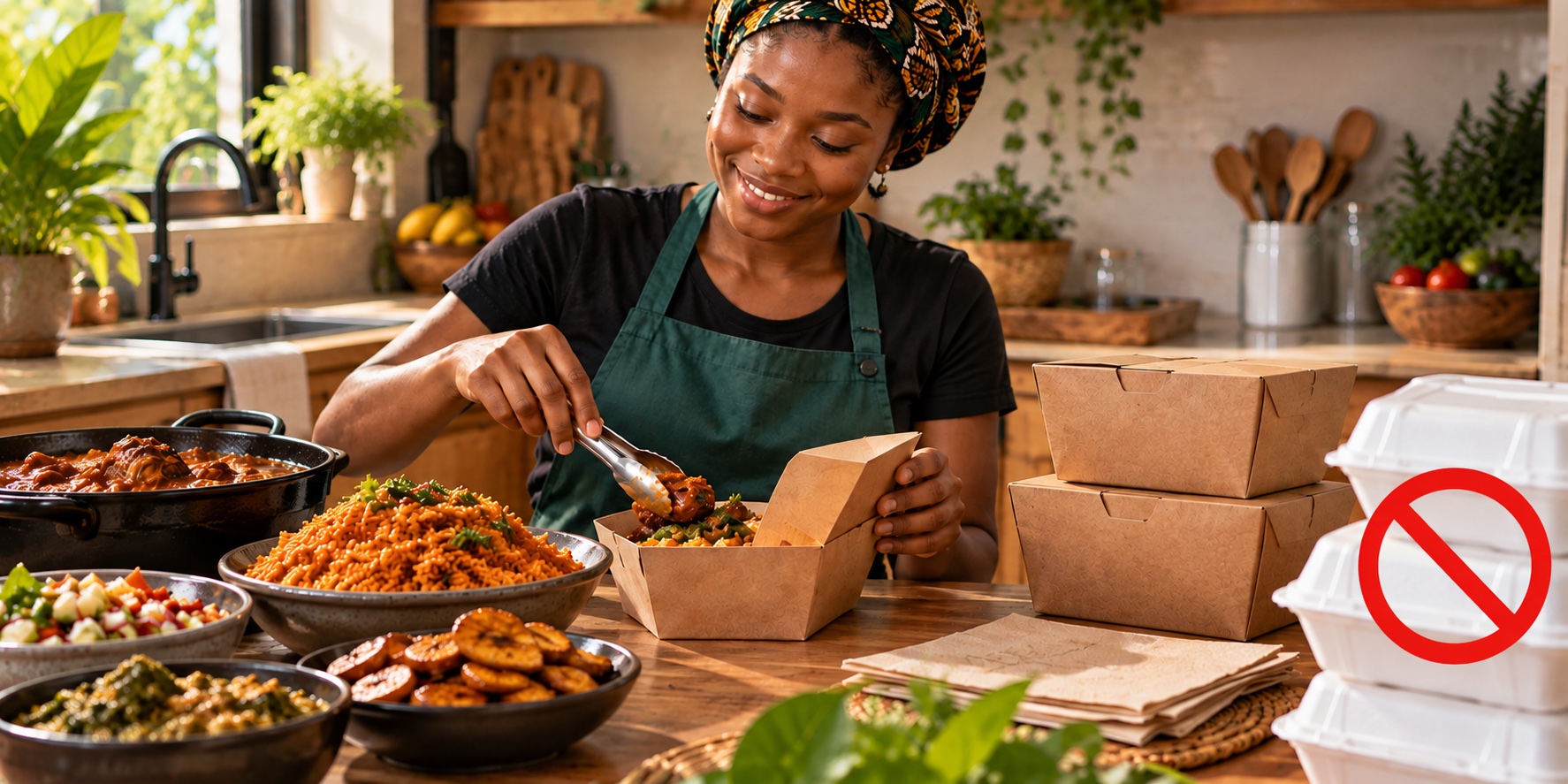
For years, the white foam takeaway pack has been everywhere in Ghana.
Restaurants use it. Chop bars use it. Street-food vendors use it. Caterers use it.
That is about to change.
From 1 January 2027, Ghana will ban the production, importation, distribution, sale and use of polystyrene foam products, commonly called Styrofoam or takeaway packs. The Environmental Protection Authority says the ban applies nationwide and covers food packaging containers, disposable foam cups and plates, and foam packs used by restaurants and food vendors, among other polystyrene products.
For food businesses, this is not a small packaging change.
It affects purchasing, food presentation, delivery quality, pricing, storage and customer expectations.
The businesses that start testing alternatives now will have a much easier transition than those waiting until December.
At a glance
Key Takeaways
- The EPA says covered polystyrene foam products, including takeaway packs, will be banned nationwide from 1 January 2027.
- Test replacement containers with real meals and normal delivery journeys before changing suppliers.
- Calculate packaging cost per order, train staff and plan how to use existing stock before the deadline.
- The current announcement targets polystyrene foam; it does not ban every plastic food container on that date.
Quick answer: What does Ghana’s Styrofoam ban mean for restaurants?
From 1 January 2027, restaurants, chop bars, caterers and food vendors will no longer be allowed to use polystyrene foam takeaway packaging covered by the ban. Businesses should begin replacing those products with reusable, recyclable or more environmentally sustainable alternatives before enforcement begins.
The EPA says enforcement will begin on the effective date and has warned importers and traders against continuing to bring in new polystyrene products ahead of the deadline.
What exactly is being banned?
The EPA’s announcement is broader than the familiar hinged food container.
The ban covers expanded polystyrene foam products including:
- food packaging containers and takeaway packs;
- disposable foam cups and plates;
- foam packaging used by restaurants, chop bars and food vendors;
- certain insulation and ceiling materials;
- foam mattresses and bedding materials;
- packaging and cushioning materials.
Polystyrene products intended specifically for medical, scientific, laboratory and diagnostic purposes are exempt, subject to the relevant regulatory requirements.
For most food businesses, however, the important takeaway is simple:
The traditional foam takeaway pack is going away.
Why is Ghana banning Styrofoam?
The EPA says the policy is intended to reduce plastic pollution, improve environmental sanitation and protect public health.
Officials have specifically pointed to Styrofoam’s persistence in the environment and its contribution to blocked drains and pollution. The EPA has described the measure as the first phase of a broader national move against problematic non-biodegradable single-use plastics.
That means restaurants should probably view this as more than a one-off packaging rule.
The direction of policy is moving toward more sustainable packaging generally.
When does enforcement begin?
The effective date is:
1 January 2027
EPA officials have said enforcement will begin on that date and indicated that there will be no further extension. The Authority has also warned that prohibited consignments imported after the deadline may be confiscated and offenders may face legal action.
The EPA has already been running public-awareness campaigns in Accra and Kumasi, including outreach to traders, consumers and businesses ahead of implementation.
So this is not something food businesses should treat as a distant proposal.
The transition is already underway.
What can restaurants use instead?
The good news is that businesses are not being asked to stop takeaway food.
They are being asked to change the packaging.
EPA officials have pointed to several alternatives already appearing in Ghanaian markets, including:
- kraft paper packaging;
- biodegradable food containers;
- paper-based packaging;
- recycled aluminium foil containers;
- recyclable plastic containers;
- packaging produced from materials such as bamboo, rice husks and coconut fibres.
The right replacement will depend on the food.
A container that works well for pastries may be a poor choice for soup.
A package that is fine for a five-minute takeaway journey may fail during a 30-minute motorcycle delivery.
That is why restaurants should not simply buy the cheapest replacement they can find.
They should test it.
Packaging is now an operations issue
For restaurants doing delivery, packaging has to do several jobs at the same time.
It has to:
- protect the food;
- resist leaks;
- retain temperature reasonably well;
- survive movement on a motorcycle;
- stack properly inside a delivery bag;
- remain easy for kitchen staff to close;
- reach the customer looking presentable.
That makes the Styrofoam transition an operations decision, not just an environmental one.
Imagine replacing a foam soup container with a paper package that softens before the rider reaches the customer.
The material may avoid the banned foam, but the delivery experience is worse.
Restaurants need to test alternatives using the same conditions under which customers actually receive food.
Start with your highest-volume meals
The easiest way to prepare is not to replace every package at once.
Start with the products you sell most often.
For example:
If jollof and chicken represent a large share of your takeaway orders, test two or three alternative containers using that meal.
Then test foods with different requirements:
Rice meals: Does the container hold steam without becoming soggy?
Soups and stews: Does it seal properly?
Fried foods: Does moisture destroy the texture?
Fish and larger proteins: Does the container have enough space without crushing the meal?
Sauces: Can they travel separately without leaking?
Drinks: What cup and lid options will remain suitable?
This gives you time to fix problems before customers are affected.
Will alternatives cost more?
Possibly, especially at the beginning.
Some replacement containers may cost more than the foam packs a business currently buys. Compare actual supplier quotes instead of assuming every alternative has the same price.
Prices may change as more businesses switch, but do not base your budget on a future price reduction.
Restaurants therefore need to think carefully about unit economics.
If your current foam container costs one amount and the replacement costs substantially more, that increase has to go somewhere.
You may need to:
- absorb part of the cost;
- negotiate bulk purchasing;
- reduce unnecessary packaging;
- redesign meal bundles;
- standardise container sizes;
- review menu pricing.
The worst approach is to discover the cost impact after the ban has already started.
Do not over-package
The transition is also a good opportunity to review how much packaging each order actually needs.
Some meals are delivered using:
one main container,
another container for sauce,
a plastic bag,
a second bag,
cutlery,
napkins,
and additional packaging that the customer throws away within minutes.
More packaging is not automatically better packaging.
The goal should be:
the minimum packaging required to deliver the food safely and professionally.
That can help manage both cost and waste.
What food-delivery platforms should think about
This change does not affect restaurants alone.
Food-delivery platforms also have a role because packaging quality directly affects the delivery experience.
A leaking meal may have been packaged by the restaurant, but the customer often remembers the entire delivery experience.
Platforms may therefore need clearer merchant guidance around:
- suitable packaging types;
- spill-resistant packaging;
- tamper protection;
- separation of hot and cold items;
- drink packaging;
- food presentation at handover.
At GoBites, this is especially relevant because merchants, riders and customers are part of the same delivery chain.
Merchant → packaging → rider → customer
If the packaging fails, everyone downstream feels the problem.
What restaurants should do before January 2027
You do not need to panic.
But you should start.
A practical transition could look like this:
- Audit your current packaging. List every Styrofoam container, plate or cup your business currently buys.
- Identify replacement options. Speak with packaging suppliers now rather than waiting for December.
- Test with real food. Pack the meal exactly as you would for a customer.
- Run delivery tests. Put the package on a motorcycle and test it over a normal delivery distance.
- Measure the cost difference. Calculate the packaging cost per order.
- Train kitchen staff. New containers may require different filling, sealing or stacking methods.
- Use remaining inventory responsibly. Do not continue placing large new Styrofoam orders that could leave you holding unusable stock close to the deadline.
EPA officials have specifically urged traders and importers to transition during the remaining period rather than risk losses once enforcement begins.
What about small food vendors?
The transition may feel particularly significant for smaller businesses because packaging costs matter at very small margins.
A street-food vendor selling inexpensive meals cannot always absorb the same packaging increase as a large restaurant chain.
But waiting does not make the problem disappear.
Small vendors can prepare by:
- buying alternatives in shared bulk quantities;
- standardising one or two container sizes;
- testing locally available paper or recyclable options;
- encouraging customers collecting food themselves to bring reusable containers where practical;
- reviewing portions and packaging together.
The businesses that adapt early may also be able to explain the change more calmly to customers.
Customers will need education too
Some customers may see a new container and assume the restaurant is simply trying to reduce quality.
That means communication matters.
A small message can be enough:
“We’ve changed our takeaway packaging as Ghana transitions away from Styrofoam.”
You do not need to turn every order into an environmental lecture.
Just make the reason clear.
Over time, the new packaging becomes normal.
Is Ghana banning all plastic food packaging?
No.
The current policy specifically targets polystyrene foam products.
EPA representatives have also discussed this ban as the first phase of a broader effort around problematic single-use plastics, but that does not mean every plastic food container becomes illegal on 1 January 2027.
Businesses should therefore avoid rumours and base purchasing decisions on official EPA guidance.
Frequently Asked Questions
When does Ghana’s Styrofoam ban start?
The ban takes effect on 1 January 2027.
Are takeaway food packs included?
Yes. The EPA specifically includes food packaging containers, takeaway packs, disposable foam cups and plates, and foam packs used by restaurants and food vendors.
Can restaurants continue using existing Styrofoam after January 1?
The EPA says the use of covered polystyrene foam products will be prohibited from the effective date, so businesses should plan to transition before then rather than rely on old stock.
What alternatives can restaurants use?
Options identified publicly by EPA officials include paper-based and kraft packaging, biodegradable containers, recycled aluminium foil, recyclable plastic containers and packaging made from some agricultural by-products.
Will sustainable packaging be more expensive?
They may. Compare current supplier quotes and calculate the cost per order. Do not assume every alternative costs more or that prices will fall before the deadline.
Is this only an Accra policy?
No. It is a nationwide ban. EPA has already conducted sensitisation activities in places including Kumasi ahead of implementation.
The bottom line
For Ghana’s food businesses, the January 2027 Styrofoam ban is not simply an environmental headline.
It is a real operational deadline.
Restaurants, chop bars, caterers and food vendors now have a few months to answer practical questions:
What will replace our current takeaway packs?
Will the new packaging survive delivery?
How much will it cost?
Will our food still reach customers in good condition?
The smartest time to answer those questions is not on 1 January.
It is now.
A packaging transition that is tested slowly can become routine.
A packaging transition done at the last minute can become expensive, chaotic and visible to customers.
For food businesses, compliance is only one part of the job.
The bigger goal is to make sure that when the packaging changes, the quality of the food experience does not.
Last reviewed: 17 September 2026.
This article is intended as general operational information for food businesses and is not legal advice. Businesses should consult current EPA guidance for official compliance requirements.
Sources and further reading
The ban’s scope and date come from the EPA’s official press statement. Campaign details come from the EPA; reported remarks on alternatives and enforcement come from Ghana News Agency’s direct interviews with EPA officials. Checked 17 September 2026. Packaging tests and transition steps are GoBites operational recommendations.
More for food businesses
Explore our delivery packaging guide, browse more merchant resources, or see GoBites for merchants.